
If you (or someone close to you) is finding it difficult to manage the daily tasks required to care for themselves at home, deciding on the next step to take can be hard. For some people, in-home support is a good option, while for others, moving to an Aged Care Residence is the best choice.
For those who choose and are eligible to enter residential Aged Care, understanding the costs that apply and the level of government funding available is an important first step. But it can be confusing and a little overwhelming, especially if the decision needs to be made suddenly.
Within Australia’s Aged Care system, there are five possible fees you may need to pay (updated for the 1 November 2025 new Aged Care Act): the Basic Daily Fee, Means Tested-Fees, Accommodation Fee and Higher Everyday Living Fee (HELF).
The fees that apply and the amount you will need to pay varies, and is dependent on your circumstances and choice of residence. So, to help you understand more about the four types of Aged Care costs, we’ve put together this handy overview.

Basic daily fee
The basic daily fee covers some of your living costs including meals, cleaning, laundry and heating and cooling. This charge is set by the government, and is capped at 85% of the standard single person rate of the basic age pension. You can find out the current charges on the Department of Health website. This fee applies to anyone entering residential Aged Care, and it is paid directly to the residence.
Means-Tested fees
When you move into residential Aged Care, you may also be required to pay Means-Tested fees (the Hotelling Supplement Contribution (HSC) and Non-Clinical Care Contribution (NCCC)) to contribute towards your living costs. The amount payable is set by the Commonwealth Government and is calculated by assessing your income and assets. You can obtain an estimate of how much you’ll need to pay by completing the means assessment on the My Aged Care website.
Accommodation fee
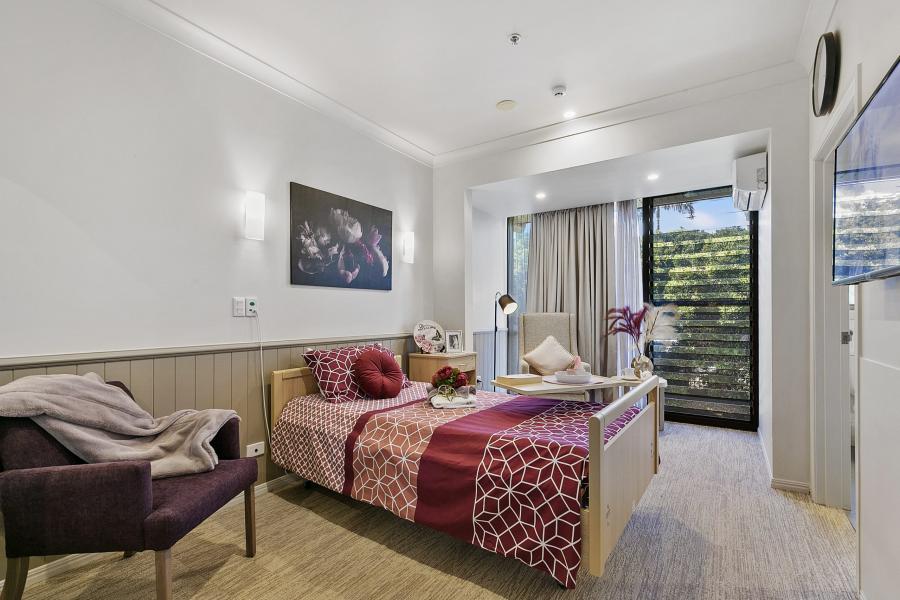
This fee is set by the Aged Care provider and covers the costs associated with your accommodation, including your room, bathroom facilities and communal areas within the residence. You have the option of paying this as a RAD (lump sum), DAP (daily charge) or RAD & DAP (combination of the two).
If you opt to pay via the RAD (Refundable Accommodation Deposit), you will need to pay it within six months of moving in, and a DAP will apply until the lump sum RAD payment is received. If you choose to pay the DAP (Daily Accommodation Payment), your fee is paid as a daily rate, which is calculated using the Government approved interest rate. This can vary, but is fixed at the date of admission. You can also split your fee, paying some as a lump sum and the rest as a daily fee.
Higher Everyday Living Fee (HELF)
The Higher Everyday Living Fee (HELF) is set by the Commonwealth Government and the Aged Care provider. The fee is an opportunity for residents to purchase additional goods and services at a higher standard than required. Based on goods and services only. Not currently offered by TriCare.
If you are looking for information on fees prior to 1 November 2025 and/or want to know more please check-out our Aged Care Reforms 2025 explainer page here.
Find the right residence for your needs and budget
Navigating your way through the many questions and decisions involved in finding the right residential aged care for you or your loved one can be challenging. That’s why as a starting point, understanding where you stand financially is a must. Knowing this upfront will help you understand your options, and guide you in finding the right Aged Care Residence for your needs and budget.
Would you like more information on the cost of Aged Care or do you require individual advice?
The Government’s My Aged Care website contains lots of useful information, and you can contact them on 1800 200 422 if you’d like to know more. You can also contact the TriCare team if you would like to discuss your individual needs or find out more about our locations, facilities and fees.