
If you spend any time at all watching television, you’ll know it’s hard to avoid the persistent advertisements for superannuation. Whether you are being asked to ‘compare the pair’, join ‘one of those’ or remember that ‘we’re all in this together’, you couldn’t be blamed if the balance of your retirement savings wasn’t ever far from your mind, especially as you get older.
Clever slogans aside, how much money you actually need to have squirrelled away in savings and super in order to live a comfortable retirement in Australia might not be as high as you think. According to the most recent report from the Association of Superannuation Funds of Australia (ASFA), the national peak body for superannuation, the average superannuation account balance across Australian savers recently hit around $172,834, with people aged 65–69 averaging about $420,934 in their super accounts — though balances vary widely by age and gender.
To help you understand how much a retiree needs to live on at different stages of life and where you stand, the government’s Moneysmart ‘How much super should I have?’ guidance offers benchmark estimates for target balances at various ages based on your goals and expected retirement lifestyle.
Comparing your own savings to these averages and targets can give you a clearer picture of what a comfortable retirement income in Australia looks like — and whether you need to adjust your savings strategy. If you’re hoping to enjoy a more comfortable lifestyle in retirement, TriCare has put together practical tips and insights to help you make the most of your super, plan ahead with confidence and take positive steps towards the future you want.

You decide what your comfortable retirement looks like
Of course, the keyword in the question above is comfortable. What exactly does a comfortable retirement in Australia look like for you? Is it the freedom to travel each year? Buying that boat you’ve always wanted? Finally taking the time to write that novel you never quite got around to?
For many Australians, ‘comfortable’ isn’t necessarily about luxury; it’s about security and choice. Research into Australians’ attitudes towards lifestyle and financial wellbeing shows that comfort is often defined by the ability to maintain independence, manage everyday expenses without stress and enjoy simple pleasures like dining out occasionally, taking short holidays and staying connected with family and friends.
Industry benchmarks help put this into perspective. ASFA’s Retirement Standard, for example, estimates that a ‘comfortable’ retirement lifestyle for a single person requires an annual income in the mid-$50,000s, while couples require around the high-$60,000s per year (assuming home ownership). This level of income is designed to support private health insurance, regular leisure activities, quality household goods and occasional travel — not extravagance.
Ultimately, how much you need to retire comfortably is personal. For some, it’s about ticking off bucket-list adventures. For others, it’s about peace of mind — maintaining the lifestyle they currently enjoy, staying healthy, remaining socially connected and avoiding unnecessary financial stress.
‘Comfortable’ vs ‘Modest’ retirement
ASFA notes there is a difference between a modest lifestyle – one in which your basic needs are met, with limited wiggle room for life’s little pleasures – and a comfortable lifestyle. Here is a comparison:
| ‘Comfortable’ Retirement | ‘Modest’ Retirement | |
| Lifestyle & Spending Power (Ages 65 – 84) | • Access to private health insurance• Own, maintain and run a reasonable car• Use home comforts (heating and air conditioning) as needed• Enjoy restaurant meals or takeaway occasionally• Participate in leisure activities (cinema, social or sporting club memberships)• Take a domestic holiday each year, a few short breaks, or an international trip every seven years• Choose a convenient location close to services, transport and community | • Basic level of private health cover (or rely on public system)• Own an older, reliable car with a limited replacement budget• Use heating or cooling selectively to manage costs• Occasional low-cost meals out• Limited paid leisure activities• One short domestic holiday each year• Live in a practical, affordable location |
| Annual Budget: Single | Approx. $50,000–$55,000+ per year* | Approx. $30,000–$35,000 per year* |
| Annual Budget: Couple (Ages 65 – 84) | Approx. $65,000–$70,000+ per year* | Approx. $45,000–$50,000 per year* |
*Estimates aligned with industry benchmarks such as the ASFA Retirement Standard. Figures assume home ownership and may vary depending on lifestyle, location and personal circumstances.
This table highlights the practical differences between a ‘modest’ and a ‘comfortable’ retirement lifestyle. A modest retirement covers everyday essentials with limited room for extras, while a comfortable retirement allows for greater flexibility, leisure and financial confidence. Understanding these distinctions can help you set realistic savings goals and decide what kind of retirement lifestyle you want to work towards.
Know your daily expenses
Before you can work out how much you’ll need to retire comfortably in Australia, you need a clear picture of what you’re currently spending and what that spending might look like in the future. Understanding your day-to-day expenses is one of the most powerful steps in retirement planning, because it turns a vague goal (‘I want to be comfortable’) into real, measurable numbers.
Here’s what to consider when calculating your expenses:
1. Housing costs
Your home is often your largest expense. Consider:
- Mortgage repayments or rent
- Council rates and strata fees
- Home and contents insurance
- Ongoing maintenance and repairs
- Utilities such as electricity, gas and water
If you expect your mortgage to be paid off before retirement, that may significantly reduce your expenses. However, maintenance and utility costs will still need to be factored in, especially if you plan to age in place.
2. Food and groceries
Track your weekly supermarket shop, takeaway meals and dining out. Be realistic. Your current habits matter for your future planning.
3. Transport
Think about:
- Fuel costs
- Car registration and insurance
- Servicing and repairs
- Vehicle replacement over time
- Public transport
Even if you drive less in retirement, you’ll likely still need a reliable vehicle, and replacing it every 7–10 years should be built into long-term planning.
4. Health and medical
Healthcare costs often increase with age. Consider:
- Private health insurance premiums
- GP and specialist gap fees
- Dental, optical and allied health
- Prescription medications
- Potential in-home support services
Even with Medicare, out-of-pocket medical expenses can be significant.
5. Insurance
Beyond health insurance, review:
- Car insurance
- Home and contents insurance
- Life insurance (if still applicable)
- Income protection (pre-retirement)
Some insurance needs may reduce in retirement, but others remain essential.
6. Leisure and lifestyle
This is where your version of ‘comfortable’ really comes into play. Include:
- Holidays and travel
- Club memberships
- Streaming services and subscriptions
- Hobbies and recreational activities
- Gifts for family and special occasions
These expenses are often underestimated, yet they’re what make retirement enjoyable.
7. Unexpected and irregular costs
Not every expense happens weekly. Plan for:
- Appliance replacement
- Home upgrades
- Emergency repairs
- Helping adult children or grandchildren
- Funeral or estate planning costs
Setting aside a buffer for the unexpected can prevent financial stress later on.

Don’t forget inflation
What costs $100 today won’t cost $100 in 10 or 20 years. Inflation gradually increases the price of everyday goods and services, which means your retirement savings need to stretch further over time.
Taking the time to track your spending — even for just three months — can give you a realistic baseline. From there, you can adjust for what might change in retirement and determine whether your current super and savings strategy are on track to support the lifestyle you want.
Figure out if you’re retiring early
One of the most important — and often overlooked — questions in retirement planning is when you plan to retire. Your retirement age has a direct impact on how long your savings will need to last.
According to the Australian Institute of Health and Welfare, Australians today are living longer than ever. Current data shows that life expectancy at birth is around 81 years for males and 85 years for females, and those who reach age 65 can expect to live well into their 80s — and often beyond. Many retirees will spend 20–30 years in retirement, with some living even longer.
The longer you live, the more you’ll need to save
If you retire at 67 and live to 87, your savings need to last 20 years.
If you retire at 60 and live to 90, your savings need to last 30 years.
That’s an entire extra decade of income, plus the impact of inflation over time.
This is where the question of how long will $1 million last in retirement in Australia becomes more complex. If you’re 67 years old and have modest lifestyle expectations and access to the Age Pension, $1 million in super may be enough to fund a comfortable retirement. But if you retire at 60, that same $1 million has to last for more years, which means you can only take out less money each year or you run the risk of running out.
Early retirement changes the equation
Retiring early doesn’t just extend the number of years you’ll rely on your savings, it can also mean:
- Fewer years contributing to super
- Less time for investment growth
- A longer wait before qualifying for the Age Pension
That combination can significantly affect whether a $1 million balance feels comfortable or tight.
It’s not just about the headline number
Rather than focusing solely on reaching a round figure like $1,000,000, it’s more helpful to ask:
- How many years might I realistically spend in retirement?
- What annual income will I need to support my lifestyle?
- When will I become eligible for government support?
Your ideal retirement living age plays a major role in determining the savings required. The earlier you step away from work, and the longer your life expectancy, the more carefully your retirement income strategy needs to be planned.
In short, longevity is one of the biggest financial variables you’ll face. Planning for a longer life isn’t just a positive thought; it’s practical.
The financial reality
ASFA recently estimated that for a single person retiring at age 65, a comfortable retirement lifestyle is achievable with a total savings balance of $545,000, or $640,000 for a couple. This equates to a per annum spend of $46,494 for single people and $65,445 for couples.
Further research from the non-profit consumer rights organisation Choice has indicated even more conservative totals are required than those suggested by ASFA. Choice found that most middle-income earners will need less than ASFA’s projected figures to maintain their current standard of living. Similarly, the recent Household, Income and Labour Dynamics in Australia Survey (HILDA) indicated that some 88% of people who were recently retired reported feeling satisfied or neutral about the current state of their retirement finances.
According to the Australian Bureau of Statistics, the number one factor that influenced people’s decision on when to retire was financial security. So how do you ensure that you achieve that healthy superannuation and savings balance that will allow your retirement to be fulfilling, enjoyable and a reward for a life of work well done, rather than a time of stress and worry? That’s where TriCare can help.
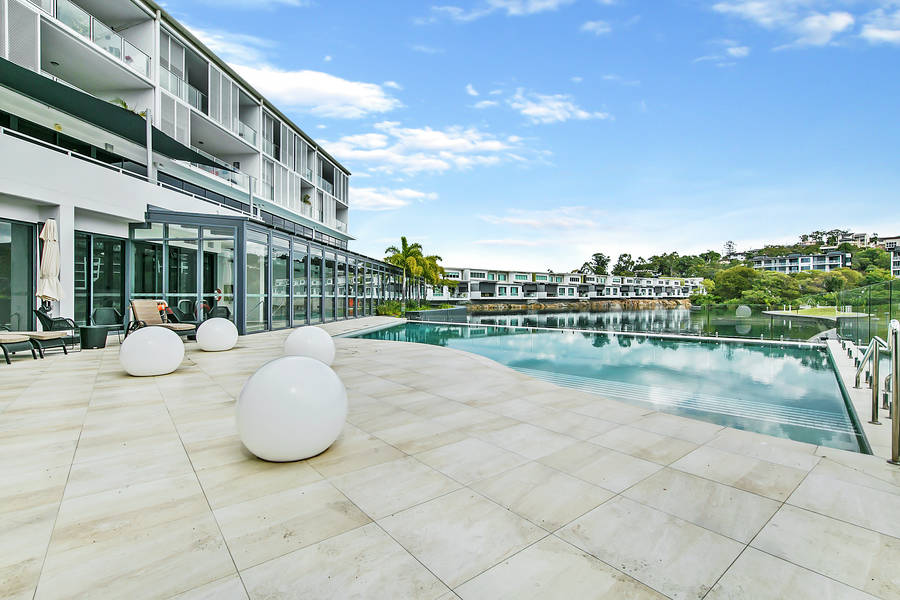
Retirement Living Lifestyle – A financially savvy choice
Our Retirement Living options allow you the flexibility and support to create the kind of fulfilling lifestyle that will make your retirement years more than comfortable. By choosing the living option that is right for you, you can ensure that your basic needs – such as dining, home maintenance, and even housekeeping if you choose – are taken care of, allowing you to focus on enjoying the many activities and social functions on offer in our close-knit communities. By downsizing you also free up cash, cut down on maintenance costs, and give yourself back time for your own enjoyment. Our communities even maintain on-site restaurants and cafes, so that eating out and sharing a meal with friends isn’t one of the comforts that falls by the wayside in your retirement years.
For more information on how TriCare Retirement Living Communities can help you achieve the comfortable and fulfilling retirement you have been looking forward to, contact us here or book a tour of one of our nine retirement living communities today.